Health & Safety Policy for Flat Clearance Westminster Operations
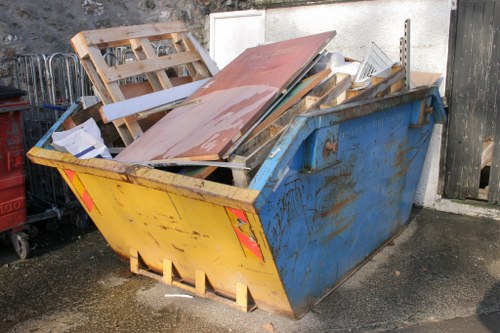 This Health and Safety Policy sets out a clear framework of responsibilities and safe working practices for our flat clearance and rubbish removal operations. It applies to every clearance crew, drivers, and staff involved in apartment clearance, waste collection, and associated site preparation. The policy emphasises that safety takes priority over speed, and that every job — from small flat junk removal to full-property clearances — must be planned and executed to minimise risk to people, property and the environment.
All personnel are required to adhere to safe systems of work, complete appropriate training, and use farmed-in occupational controls. Management will ensure adequate resources for risk assessments, personal protective equipment (PPE), safe handling tools and vehicle maintenance. Supervisors will record briefings and ensure that crews are competent when dealing with bulky items, hazardous materials or tight access situations often encountered in flat clearance services.
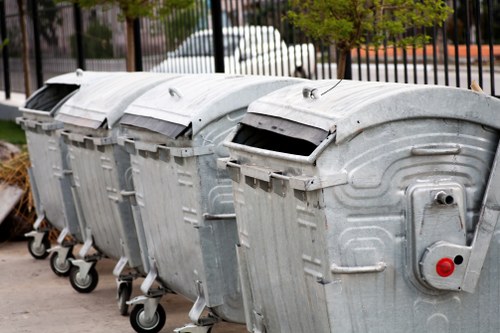 The following sections describe responsibilities, procedures and expectations that govern our flat clearance and rubbish removal services. This policy is designed to be practical and proportionate for clearance teams, waste transfer operations and temporary storage tasks, while remaining sufficiently robust to cover a range of scenarios from small apartment pickup to large-scale vacate clearances.
Management Responsibilities: Directors and operations managers must ensure that a documented risk assessment is completed before works commence. They will appoint competent supervisors, ensure training standards for manual handling and safe lifting, and provide clear instructions for the segregation and disposal of waste. Management will also ensure that vehicle checks, load securement and insurance cover are maintained as part of daily pre-shift routines.
 Employee Responsibilities: Crew members must report hazards, use provided PPE such as gloves, hi-vis and protective footwear, and follow manual handling techniques. Staff should take extra care with sharp, broken or unknown items and avoid moving materials that present obvious contamination or chemical risks. If hazardous waste is encountered, the team will withdraw and notify a supervisor; only trained personnel will handle identified hazardous items.
Control Measures and Safe Working Practices: The policy promotes the use of mechanical aids, two-person lifts for heavy items, and protective barriers for dust control when appropriate. We maintain an inventory of tools and specialist equipment for safe flat clearances, such as sack trucks, lifting straps and wheeled bins, and ensure vehicles are fitted with proper restraint systems. Emphasis is placed on clear communication between drivers and crews and on safe routes for carrying items to vehicles to reduce trip and fall risks.
- Risk assessments before each job
- PPE for all crew members
- Segregation of recyclable and non-recyclable waste
- Procedures for suspected hazardous materials
- Vehicle and equipment daily checks
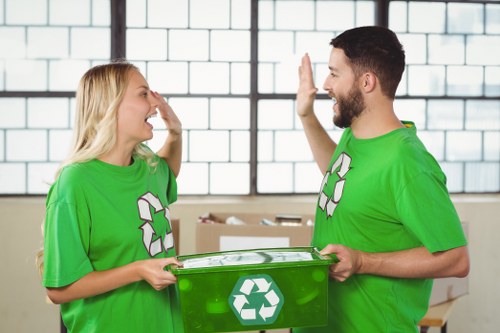 Waste Handling and Environmental Controls: Our clearance teams follow procedures to sort, segregate and transport rubbish responsibly. Recyclables are separated where feasible and hazardous items are identified and handled according to safety protocols. Dust suppression and spill controls are applied during load-out to prevent contamination; crews are trained to use absorbents and containment where necessary. We also maintain records of disposal routes and ensure that waste is transferred to licensed facilities in accordance with applicable regulations.
Training and Competence: Regular training sessions cover manual handling, vehicle safety, hazardous material awareness and emergency procedures. New staff receive induction training and on-site mentoring until competence is demonstrated. Supervisors conduct regular toolbox talks to reinforce safe behaviour and to highlight any site-specific hazards such as steep staircases, limited access lifts or fragile flooring encountered during flat clearance projects.
 Incident Reporting and Continuous Improvement: All incidents, near misses and unsafe conditions must be reported promptly and investigated to identify root causes and corrective actions. Records of incidents, training and risk assessments will be reviewed periodically to drive improvements. We foster an open safety culture where employees are encouraged to suggest improvements and where lessons learned are shared across teams to prevent recurrence.
Implementation and Review
Implementation: The policy is implemented through daily briefings, documented risk assessments and supervisor oversight. Practical checklists are used for each job to ensure consistent application of controls for bulk clearance, garden waste removal and internal flat clear-outs. Supervisors will confirm that PPE is used and that all loads are secured and covered for transit where appropriate.
Policy Review
Review: This Health & Safety Policy will be reviewed at regular intervals and updated to reflect operational changes, legislative updates and lessons from audits or incident investigations. The aim is to maintain a safe, compliant and effective clearance service that protects staff, clients and the environment while delivering reliable rubbish removal and clearance operations.
Commitment: We are committed to maintaining and continuously improving health and safety standards across all flat clearance and rubbish removal activities. By combining robust procedures, practical controls and engaged staff we aim to deliver safe, responsible clearance services in all operational areas.